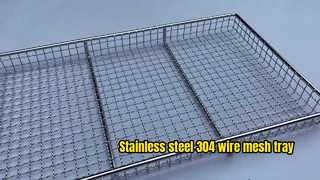
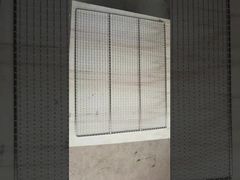
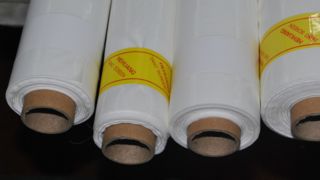
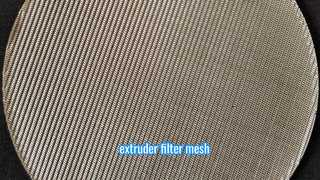
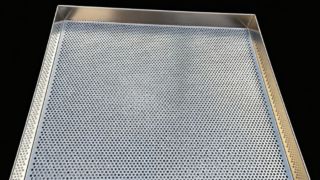
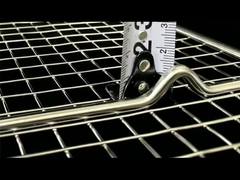
Brief: Wondering how it compares to other options? See the demo and decide for yourself. In this video, we showcase our customized metal dehydrator perforated baking trays, demonstrating their durable stainless steel construction and versatile applications in baking and food drying. You'll see how the perforation design improves heat and vapor flow, learn about the stackable feature for space-saving storage, and discover the various industries and food types these trays are designed for.
Related Product Features:
Customizable perforated or non-perforated trays made from food-grade 304, 316, or 316L stainless steel.
Hand-welded construction with options for various hole sizes and plate thicknesses to meet specific needs.
Perforation design facilitates efficient water vapor and heat flow, improving baking and drying processing efficiency.
Stackable design saves storage space when the trays are not in use.
Superior heat conductivity and abrasion resistance for long-lasting durability and performance.
Reinforced encapsulated steel rim prevents warping and ensures structural integrity under high temperatures.
Corrosion-resistant and rust-proof, suitable for direct food contact and industrial environments.
Widely used in pharmaceutical, chemical, food processing, agricultural, and home kitchen applications.
Faqs:
What materials are used for these perforated baking trays?
The trays are made from food-grade stainless steel, including options for 304, 316, and 316L grades, ensuring they are green, non-toxic, and safe for direct food contact.
Can the trays be customized in size and hole pattern?
Yes, we support full customization of tray sizes, hole sizes (such as 3mm, 5mm, 6mm, or 8mm), and plate thicknesses (from 0.6mm to 1.5mm) to meet your specific baking or drying requirements.
What are the main applications of these dehydrator trays?
These trays are widely used for drying seafood like fish and shrimp, agricultural products like fruits and vegetables, and Chinese herbal medicines. They are also suitable for baking, freezing, and serving in home kitchens, hotels, bakeries, and food processing factories.
How does the perforated design benefit the drying process?
The perforation design allows for better airflow and heat conduction, facilitating the efficient removal of water vapor during drying or baking, which helps improve processing efficiency and product quality.